

Myopia Management in Frisco, TX
Myopia, commonly known as nearsightedness, is becoming increasingly common among children worldwide. In fact, researchers estimate that nearly half of the global population could be myopic by 2050. At EyeQ Vision, we take a proactive approach to managing myopia through early detection, advanced monitoring, and personalized treatment plans.
What Is Myopia?
Myopia, also called nearsightedness, is a common eye condition that causes distant objects to appear blurry while nearby objects remain clear. It develops when the eye grows too long from front to back, causing light to focus in front of the retina instead of directly on it.
Many parents notice myopia when their child begins squinting to see the board at school, struggles to recognize distant objects, or requires frequent prescription updates. While glasses and contact lenses can correct blurry vision, they do not prevent the eye from continuing to elongate as a child grows.

Why Does Myopia Need to be Managed?
As the eye continues to elongate, the risk of developing severe eye conditions later in life increases. Children with higher levels of myopia may face a greater likelihood of retinal detachment, glaucoma, myopic macular degeneration, and certain types of cataracts as adults.
Research has shown that myopia is becoming more common among children, making early intervention increasingly important. The earlier myopia progression is identified and monitored, the greater the opportunity to slow its advancement and reduce future risks.

Signs Your Child May Be Developing Myopia
Many children assume that everyone sees the world the same way they do and may not mention symptoms until their vision begins affecting school, sports, or everyday activities. Common signs that your child may be developing myopia include:
- Squinting to see distant objects
- Sitting closer to televisions, tablets, or classroom screens
- Difficulty seeing the board at school
- Holding books or devices unusually close to their face
- Frequent headaches or eye strain
- Complaints of blurry distance vision
- Rubbing their eyes frequently
- A noticeable decline in academic performance or classroom participation
- Increased sensitivity to glare while outdoors
If your child is experiencing any of these symptoms, an eye exam can help determine whether myopia or another vision condition may be affecting their sight.
Our Approach to Myopia Management
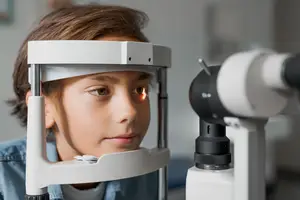
Every child's eyes develop differently, which is why successful myopia management is personal. At EyeQ Vision, our Frisco eye doctors begin with a myopia evaluation to understand your child's vision, eye health, lifestyle, family history, and risk factors.
Using advanced diagnostic technology, we establish baseline measurements and closely monitor changes. This information helps us determine which management strategies may be most effective for your child while allowing us to track their progress as they grow.
Comprehensive assessments designed to evaluate your child's vision, eye health, and risk factors for progressive myopia.
Regular monitoring helps us track prescription changes, assess eye growth, and make timely adjustments to your child's treatment plan.
Personalized guidance that promotes healthy visual habits and supports long-term eye health.

MiSight® Contact Lenses
MiSight® 1-day contact lenses are the first and only U.S. Food and Drug Administration (FDA)-approved soft contact lenses proven to slow myopia progression in children. These daily disposable lenses provide clear vision while simultaneously helping manage the eye growth associated with worsening nearsightedness.
Unlike traditional contact lenses that simply correct blurry vision, MiSight® lenses use a specialized optical design that helps reduce the stimulus for continued elongation of the eye.
Because MiSight® lenses are replaced each day, they are convenient, hygienic, and easy to incorporate into an active lifestyle. During your child's myopia evaluation, our optometrists will determine whether MiSight® contact lenses are an appropriate option based on their age, prescription, and needs.

Essilor® Stellest® Lenses for Myopia
For children who prefer glasses, Stellest® lenses offer an innovative approach to myopia management. These advanced spectacle lenses are designed to provide clear vision while helping slow the progression of nearsightedness by addressing how light focuses within the eye.
Traditional eyeglass lenses correct blurry distance vision but do not actively manage myopia progression. Stellest® lenses work differently by incorporating highly aspherical lens technology that helps influence eye growth.
Stellest® lenses are an excellent option for children who are not ready for contact lenses or families who prefer a glasses-based solution. When combined with regular monitoring and healthy visual habits, Stellest® lenses can play an important role in a comprehensive myopia management plan.
Frequently Asked Questions About Myopia
Nearsightedness, also known as myopia, is one of the most common vision conditions worldwide. Researchers estimate that nearly half of the global population could be myopic by 2050. Myopia is becoming increasingly common among children, making early detection and management more important than ever.
Nearsightedness frequently becomes stronger during a child's growing years, especially between elementary school and the late teenage years. While many prescriptions stabilize in adulthood, some individuals may continue to experience changes over time. Regular eye exams help monitor these changes and ensure appropriate vision correction and management.
Glasses correct nearsightedness by using specially designed lenses that help focus light directly onto the retina. This allows distant objects to appear clearer and sharper. While glasses effectively improve vision, traditional single-vision lenses do not slow the progression of myopia. Specialized myopia management options, such as Stellest® lenses, are designed to address vision correction and myopia progression.

Schedule a Myopia Evaluation in Frisco
Myopia management is most effective when it begins early. If your child has been diagnosed with nearsightedness, is experiencing frequent prescription changes, or is showing signs of developing myopia, the team at EyeQ Vision can help. Schedule a myopia evaluation and learn how we can help protect your child's long-term eye health.