
Myopia in Children: What to Know Before School Starts
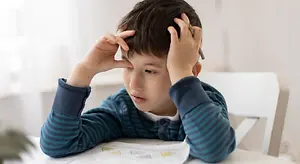
As a new school year approaches, parents are busy checking off supply lists, adjusting schedules, and preparing their children for the classroom. It’s also a good time to pay attention to something that can have a major impact on learning and everyday activities: your child’s vision.
Myopia in children, commonly called nearsightedness, can make distant objects appear blurry while closer objects remain clear. For a student, that may mean struggling to see the board, read a presentation from across the classroom, or clearly follow the action during sports. Because myopia can progress as children grow, recognizing changes in their vision is especially important.
This back-to-school season, understanding the signs of childhood myopia and knowing when specialty myopia care may help can help you make informed decisions about your child’s vision.
Why Myopia in Children Matters During the School Year
Children rely on their vision throughout the school day. They shift their focus from books and tablets at close range to teachers, whiteboards, and presentations farther away. When a child has myopia, those distance-focused activities can become more difficult.
Nearsightedness in children may become particularly noticeable once school starts because the classroom places new demands on their distance vision. A child who seemed to see well over the summer may suddenly mention that words on the board look blurry or that they have trouble seeing from the back of the classroom.
What Does Myopia Look Like in the Classroom?
Blurry distance vision is one of the most recognizable myopia symptoms in children, but children do not always describe the problem that clearly. Instead, parents or teachers may notice changes in their behavior.
A child may move closer to the television, ask to sit closer to the front of the classroom, or squint when looking across a room. They may also have difficulty recognizing people or objects at a distance or struggle with activities that require clear distance vision.
Why a Child May Not Tell You Their Vision Has Changed
Children do not necessarily know when their vision is not as clear as it should be. If their eyesight has changed gradually, blurry distance vision may simply seem normal to them.
That is why observing your child's habits and keeping up with regular eye care can be valuable. A children's eye exam can identify changes that might otherwise be difficult for a child to recognize or explain.
Signs of Myopia in Children to Watch for This School Year
The signs of myopia in children can vary, and not every child will experience the same symptoms. As school begins, watch for behaviors that could suggest difficulty seeing clearly at a distance.
Possible signs include:
- Squinting when looking at distant objects
- Difficulty seeing the board or classroom displays
- Wanting to sit closer to the television or front of the classroom
- Complaining that distant objects look blurry
- Difficulty recognizing people from farther away
- Headaches or visual discomfort after visually demanding activities
- Trouble participating in sports or activities that rely on clear distance vision
These behaviors do not automatically mean your child has myopia, but they are good reasons to schedule an eye examination. A back-to-school eye exam can help determine whether your child's vision has changed and whether additional care is appropriate.
Why Does Childhood Myopia Get Worse?
For many children, myopia is not a one-time change in vision. It can progress throughout childhood and adolescence, meaning the degree of nearsightedness increases over time.
Understanding myopia progression is important because updating a child's prescription addresses how clearly they see at that moment, while specialty myopia care can focus on how their nearsightedness changes as they grow.
There is not one single answer to what causes myopia in children. Genetics and environmental factors can both play a role.
Genetics and Myopia
Family history is one factor associated with childhood myopia. Children with nearsighted parents may have an increased likelihood of developing myopia themselves.
Family history is not the only consideration, however. A child's daily visual habits and environment can also be relevant when discussing their risk and vision needs.
Screen Time, Near Work, and Myopia
Between homework, reading, computers, tablets, and phones, children can spend a significant amount of their day focused on things up close. This has led many parents to ask about screen time and myopia.
Research has found associations between childhood myopia and lifestyle factors that include extended near work, such as reading and using digital devices. Myopia is influenced by multiple factors, so rather than blaming one device or activity, parents can focus on building balanced visual habits throughout the day.
That may include taking regular breaks from prolonged near work, varying activities, and creating opportunities for children to spend time away from screens.
Can Spending More Time Outdoors Help?
Outdoor time and myopia are also frequently discussed together. Research has found that spending more time outdoors is associated with a lower risk of children developing myopia.
Encouraging outdoor play can be a healthy part of a child's routine, particularly during a school year filled with homework and other near-focused activities. However, children who already have myopia still need appropriate professional care and monitoring.
If your child's vision is changing, an eye doctor can evaluate their prescription and discuss whether specialty management may be appropriate.
Correcting Myopia vs. Managing Myopia Progression
One of the most important things for parents to understand about childhood myopia is the difference between vision correction and myopia management.
Traditional glasses or contact lenses can correct nearsightedness so a child can see distant objects more clearly. That is important for everyday life, including school, sports, and other activities.
Myopia control, or myopia management, has an additional goal: slowing the progression of nearsightedness during childhood.
Why does that distinction matter? Myopia can continue to progress as the eyes grow. Higher levels of myopia are associated with a greater lifetime risk of certain eye health complications. Slowing progression can therefore be an important part of caring for a child's vision beyond simply helping them see clearly today.
If your child's prescription has been getting stronger, a specialty evaluation can help you understand whether there are options designed to slow its progression.
What Are the Options for Myopia Management?
There is no single myopia treatment that is right for every patient. For families exploring myopia treatment for children in Frisco, the right approach depends on factors such as age, prescription, eye health, rate of progression, and lifestyle.
At EyeQ Vision, specialty options include Stellest® lenses and MiSight® 1 day contact lenses. These options give families different ways to address a child's vision needs while incorporating myopia control into their care plan.
Stellest® lenses offer a spectacle-based option for children who need vision correction and myopia management. MiSight® 1 day contact lenses provide another option for eligible children who may be comfortable with contact lens wear. The right choice depends on the individual child, which is why a personalized evaluation is an important part of the process.
A myopia evaluation allows the eye doctor to assess changes in vision, consider relevant risk factors, and recommend an appropriate management plan. Regular follow-up is also important so progress can be monitored and the plan adjusted when necessary.
When Should Your Child See a Myopia Specialist?
You do not need to wait until your child has a very strong prescription to ask about specialty myopia care.
Consider talking with a myopia specialist if:
- Your child is having difficulty seeing distant objects
- They frequently squint to see the board or television
- Their glasses or contact lens prescription has repeatedly increased
- They have already been diagnosed with myopia
- Myopia runs in your family
- You are concerned about how quickly their nearsightedness is progressing
- You want to learn whether myopia management may be appropriate
If you're looking for a myopia specialist in Frisco, the eye doctors at EyeQ Vision can evaluate both your child's current vision and how their myopia is changing over time.
Even if you are unsure whether the changes you are noticing are related to myopia, an examination is a useful place to start.
Make Myopia Management Part of Your Back-to-School Routine
Back-to-school preparation is not only about notebooks, backpacks, and new schedules. Clear, comfortable vision can help children participate confidently in the classroom and the activities they enjoy outside of it.
If your child already has myopia, has experienced prescription changes, or is showing possible signs of nearsightedness, the beginning of the school year is an excellent time to check in on their vision.
At EyeQ Vision, we provide personalized myopia management in Frisco to help families understand their child's changing vision and explore appropriate management options. Our team can evaluate your child's needs, answer your questions, and create a plan designed to support their vision as they grow.
Schedule your child's myopia evaluation with EyeQ Vision today to learn more about their vision and the options available for managing myopia progression.
Frequently Asked Questions About Myopia in Children
Common early signs can include squinting, difficulty seeing the board, sitting closer to the television, or saying that distant objects look blurry. Because children may not realize their vision has changed, parents and teachers can play an important role in noticing these behaviors.
Myopia is influenced by multiple factors, including genetics and environment. Research has associated prolonged near work and certain patterns of screen use with childhood myopia. Encouraging breaks from close-up activities and balancing screen time with other activities can support healthy visual habits.
Research suggests that spending more time outdoors is associated with a reduced risk of developing myopia in children. Outdoor activity is a helpful habit, but children who already have myopia should still receive appropriate eye care and monitoring.
Standard prescription glasses correct blurry vision caused by myopia, but conventional glasses are not generally designed specifically to slow myopia progression. Specialty myopia control strategies are intended to address progression in addition to providing clear vision.
Consider a specialty evaluation if your child has been diagnosed with myopia, their prescription is becoming stronger, they have a family history of nearsightedness, or you are concerned about their distance vision. A specialist can evaluate their individual risk factors and discuss whether childhood myopia care in Frisco may be appropriate.